
|
Mental Health & Wellbeing – September 2026
Tuesday, 15 September 2026
|
|
Welcome to this month's Mental Health and Wellbeing section of the OIU newsletter This month we're looking at something simple that most of us never quite get around to: writing down a personal mental health plan. But before we do, please SAVE THE DATE for the next in our Mens Mental Health Series. Once again to be held at The Union Hotel on Thursday 29 October. More details to come shortly on our panel. Building a Personal Mental Health Plan Mental wellbeing doesn't look after itself. It responds to the same deliberate care we give our physical health, which is why having a plan for it matters. A good plan pulls together the everyday habits that protect mood and resilience: what we eat, how we sleep, how much we move, and how we handle the moments when stress or negative thinking start to take hold. Getting those things down on paper, rather than leaving them to chance, makes it far easier to notice what's working, adjust when life gets busy, and stay well over the long run. 1. Start with the basics: diet, hydration and sleep Diet, hydration and sleep are the foundation. A balanced diet built around vegetables, fruit, wholegrains, legumes and lean protein, with processed and sugary food kept to a moderate level, is linked to a reduced risk of depression. Hydration matters too, as even mild dehydration can affect concentration and mood. Sleep is just as critical. Most adults need at least seven hours a night for mood regulation, memory and stress management, and consistent bed and wake times, a simple wind down routine and fewer screens before bed all make a measurable difference. 2. Movement and mindfulness The World Health Organization recommends adults aim for 150 to 300 minutes of moderate intensity activity each week, or 75 to 150 minutes of vigorous activity, and notes that any amount of exercise reduces symptoms of anxiety and depression while improving sleep and cognitive health. In practice, the best exercise is the one you'll actually stick with, whether that's a walk, a swim or a hit with mates. Alongside that, regular meditation, breathing exercises or other mindfulness practice can lower stress hormones, settle a racing mind and build the mental muscle needed to catch negative thought patterns before they spiral. Staying involved in things you enjoy also counts, so sport, hobbies, volunteering, or simply time with family and Old Ignatian mates all add a further layer of protection against isolation and low mood. 3. Know your own warning signs Self awareness is what ties the plan together. Learning to recognise your own early signs of stress or a dip in mood, and knowing how you'll respond, is one of the most effective tools for staying well. That response might be calling a mate, adjusting your routine, or getting professional support. For some it will also include medication prescribed by a GP or psychiatrist, which is a legitimate and often essential part of a plan rather than a last resort. The Australian Government funds mental health support through Medicare, allowing your GP to prepare a Mental Health Treatment Plan that gives you rebates for up to 10 individual sessions with a psychologist or other mental health professional each calendar year. None of these elements works on its own. It's the combination of sound lifestyle habits, honest self reflection and a readiness to ask for help that builds genuine, lasting resilience. 4. A Few Good Resources If you'd like to dig a bit deeper, these two are worth your time: A New Way of Being – podcast episode on building a mental health plan September Mental Health Walk September's mental health walk returns to Centennial Park. 6.30am at the Greenhouse cafe Friday 25th September 2026. Check in on your mates We stumbled across this stuck up on a wall in the Quadrangle on a recent visit to the school, and it is a message that we wanted to share. 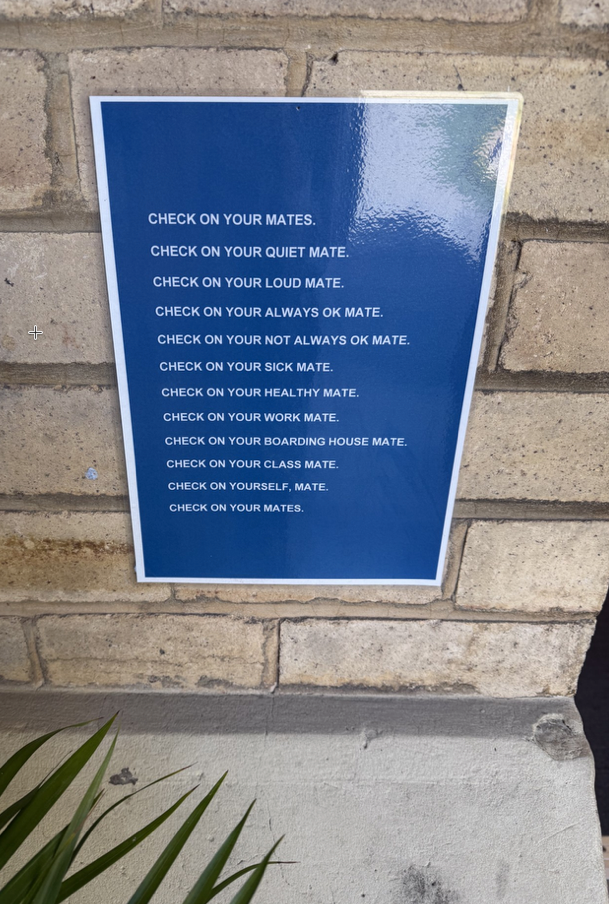 As always, if you're not travelling well, or you're not sure where to start, your GP is the best first port of call. They can help you put a plan together and point you towards the right support. If you have ideas, experiences to share, or would like to contribute to this section of the newsletter, please reach out. This initiative works best when it reflects the voices and experiences of the Old Boys it's designed to support. |