|
Alumni Industry Focus: Farming
Saturday, 24 October 2026
|
|
Farming brings together family, hard work and a close connection to the land, while continually adapting to changing conditions and new technology. In this edition of Alumni Industry Focus, Mark Mason (OR1983), Mick Bryant (OR1989) and Joe Mason (OR1991) share their experiences across central west NSW - from cattle and sheep to large-scale livestock and cropping - and reflect on the challenges, innovations and opportunities shaping Australian agriculture.
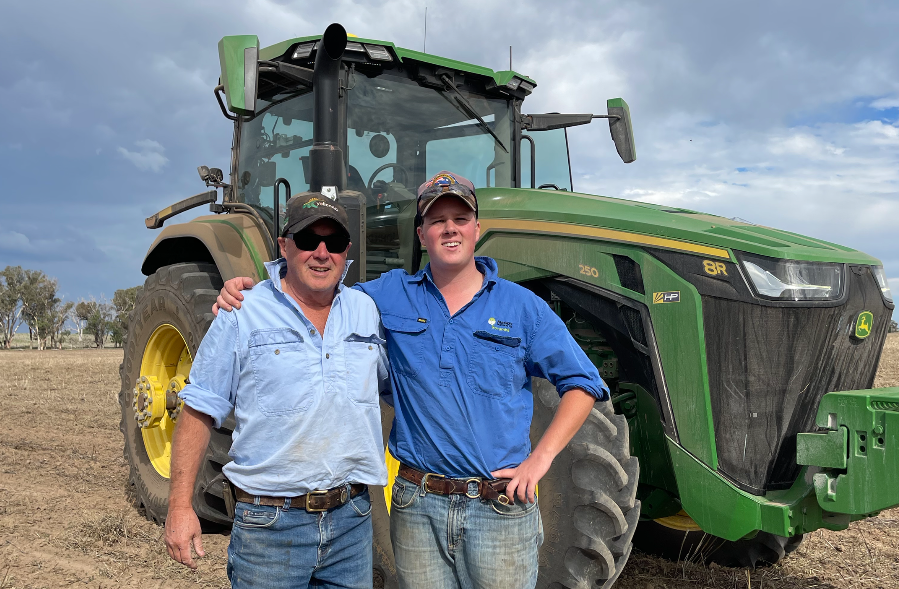
Mark Mason (OR83)
1. Tell us about your current role and the area of farming you work in. We own two properties in central west NSW: one east of Bathurst and the other at Baldry. We mainly focus on cattle, with a mix of trading and breeding. We also run sheep and grow fodder crops.
2. What do you find most interesting or challenging about working in farming right now? There are many and varied challenges. Weather, interest rates and markets are always major factors in dryland farming. But producing food and working with your family far outweigh the challenges.
3. How has the profession evolved since you started your career? Are there any trends you're watching closely?
My career has taken a few different turns. My father died suddenly the year after I left Riverview, and our family farm was sold, so I spent 25 years in corporate agriculture before returning to farming.
Fundamentally, we're all at the mercy of the weather. Technology has had a huge impact on farming in my lifetime, with major productivity gains in cropping in particular. We've also become better at understanding and working with livestock.
Drones are becoming more common and will continue to play a bigger role in agriculture. Autonomous machinery will also become a major factor in our sector as its cost comes down. AI is still a bit of an unknown, but it's already a useful tool for modelling and research.
Agriculture is a major contributor to the Australian economy, and the demand for labour is
significant. There aren't enough young people entering the industry, which creates a huge opportunity for those interested in agriculture.
4. How did your time at Riverview shape your career or outlook?
We had a great agriculture teacher at Riverview, Col McIntyre. He was an excellent teacher who really fostered our love of all things agriculture.
5. If you could have dinner with anyone, past or present, who would it be, and what would you order?
That's easy: my dad. I reckon we'd have a steak, and we'd have a lot to cover in the 42 years he's been gone.
Mark Mason (OR83, Owen)
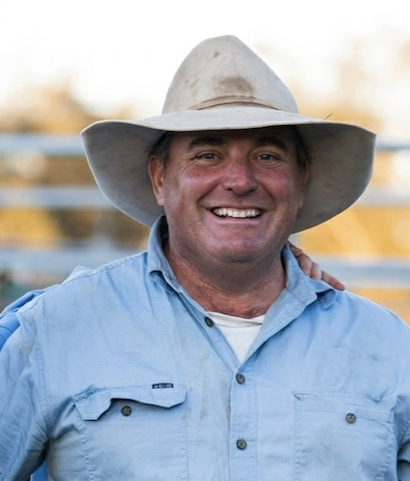
Mick Bryant (OR1989)
1. Tell us about your current role and the area of farming you work in.
I'm the General Manager of sheep operations for a large Australian agricultural company, based 75 kilometres west of Wagga Wagga. The company is a vertically integrated operation spanning 2.3 million hectares, with 200,000 head of livestock, predominantly across Queensland and the Northern Territory, as well as its sheep operations in NSW.
The company produces certified organic beef and lamb for domestic supermarkets such as Macro and Cleavers, as well as overseas markets including the USA, Japan and South America.
2. What do you find most interesting or challenging about working in farming right now?
Agriculture is seasonally challenging and costs have increased. However, new techniques are making the industry very satisfying, and you get a great deal out of producing food and fibre.
3. How has the profession evolved since you started your career? Are there any trends you're watching closely?
Agriculture has moved rapidly towards adopting new and more efficient ways of managing livestock and crop production. Automation has been a major contributor, with machinery enabling greater precision in crop planting, irrigation and managing animal performance.
Drone technology is beginning to introduce another wave of change, from weed management and mustering to assessing paddocks for feed.
4. How did your time at Riverview shape your career or outlook?
Riverview is a great school. The long-term friendships and lifelong values it gave me have certainly contributed to my career and to the people I've been fortunate to meet along the way.
5. If you could have dinner with anyone, past or present, who would it be, and what would you order?
I'd never pass up a meal with any of the '89 Old Boys. If I had to choose one dinner guest, it would be Stephen Larkham. I'd order Scotch fillet and vegetables, cooked medium-rare. He was a creative player who performed well under pressure.
Mick Bryant (OR1989, More)
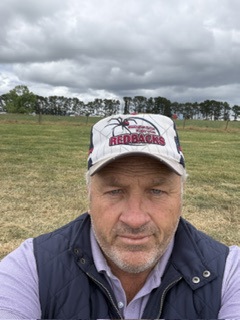
Joe Mason (OR1991)
1. Tell us about your current role and the area of farming you work in.
My brother Sam (OR2000) and I run our family farming operation, Spicers Run Partnership, about 30 kilometres north-east of Wellington in central west NSW. We also have a joint venture on the southern side of Wellington with our cousin Matt Mason (OR1991).
It's a mixed farming operation. We run 10,000 Merino ewes joined to Border Leicester rams and 3,500 first-cross ewes joined to Dorset rams. They graze improved pasture of lucerne, phalaris, clover and chicory. The remaining land is used for cropping, with about 2,300 hectares of wheat, canola and barley.
2. What do you find most interesting or challenging about working in farming right now?
The most challenging and interesting parts of what we do involve the many factors outside our control: the weather, commodity prices and rapidly rising input costs such as fuel, fertiliser, machinery, labour and compliance.
Among the things we can control, having good staff is vital to getting everything done well and, most importantly, on time. Good relationships with high-quality contractors are important too. We focus on soil fertility, plant health, animal genetics, welfare, nutrition and husbandry, as well as marketing and market intelligence, all in the hope of making a profit.
3. How has the profession evolved since you started your career? Are there any trends you're watching closely?
There is definitely more paperwork and compliance than when I started. Changes in cropping techniques and equipment have made that part of our operation far more efficient, reducing labour and helping us maximise the grain grown from available rainfall.
Changes in sheep farming have come in smaller steps. Better handling facilities, laneways, genetics, animal health products and nutritional knowledge have all helped, but traditional wool-growing sheep are still relatively labour-intensive compared with the shedding types that are gaining popularity.
We're also implementing, or keeping an eye on, further advances such as drones, remote water sensors, plant-available water monitoring and remote animal-weight monitoring.
4. How did your time at Riverview shape your career or outlook?
I loved my time at Riverview. I started as a Year 6 boarder in 1985 after attending Spicers Creek Public School, which had between nine and 14 students from Kindergarten to Year 6. It was a wonderful opportunity, and I'll always be grateful to my parents, Michael (OR60) and Anne.
A whole new world opened up. Virtually no day goes by without me being in touch in some way with friends from Riverview. I think I spoke to four of them yesterday, for example.
I've also loved being involved with Riverview again through our four boys: Max (OR24), Oscar (OR25), and twins Archer and Rupert, who are about to head into their final year. It's a fantastic community with a great culture, and I think the school is currently the best it's ever been.
5. If you could have dinner with anyone, past or present, who would it be, and what would you order?
I never got to meet my paternal grandfather, Claude Mason, who was also a farmer at Spicers Creek on our original family property, Westwood, where my cousin now lives. I'd have dinner with him and let him choose what we ate and drank.
Joe Mason (OR1991, Campion)
Editor: And in case you're wondering, yes Mark and Joe are related - they're second cousins. Their passion for farming runs deep in the Mason family! |